
Cold selling is reaching its limit
We've all felt it.
That generic message that doesn't connect.
That mass email that seems to have been written in 2010.
That call that comes without context, without timing and without understanding who you are.
The reality is that the modern customer no longer responds to that type of contact.
According to McKinsey, the 71% consumers expect personalized experiences when interacting with a company (McKinsey, 2024).
And Deloitte reported that effective personalization can increase conversions by up to 20% (Deloitte, 2024).
The cold sale didn't die out of ill intent.
He died because it stopped being relevant.
Customization ceased to be a “luxury” and became the minimum standard
A few years ago, personalizing meant adding the customer's name to the message.
That's noise today.
Modern personalization—the one that really changes conversations—understands:
- Who is the customer
- What do you need
- At what time is
- What doubts do you usually have
- What context does it bring
- What signs of intent are you showing
Salesforce found that the 56% of consumers would change brands if they feel that the company doesn't understand it (Salesforce Research, 2024).
The generic message no longer works.
Not even in the mail.
Not on WhatsApp.
Not even on networks.
Not even on calls.
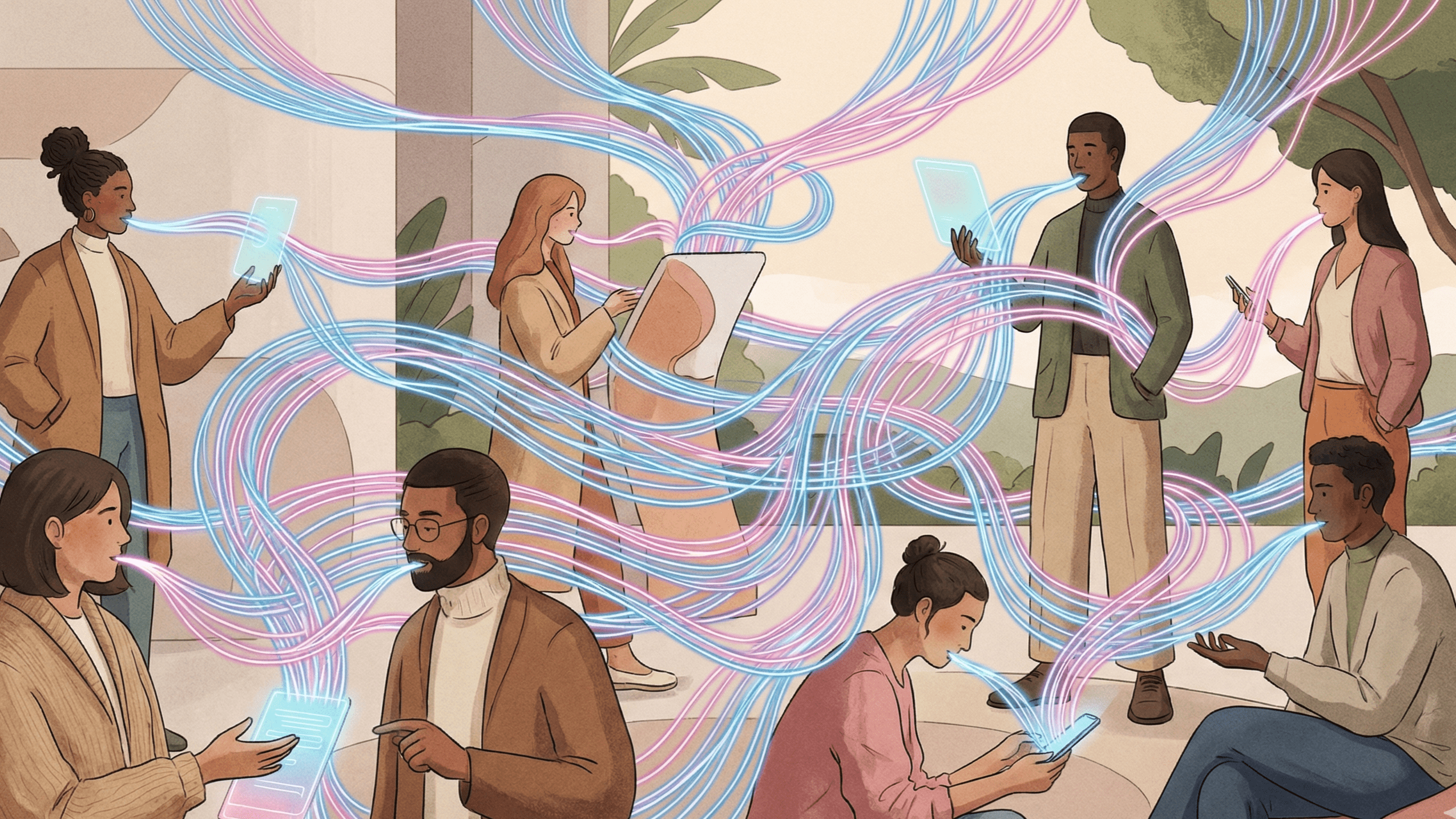
Conversational AI did something that changed the game
AI doesn't just respond.
Listen to patterns.
Recognize intentions.
Connect dots.
Detect buying signals.
Identify common objections.
And adapt the message instantly.
Something that no person can do with hundreds of simultaneous conversations.
According to the Stanford AI Index, conversational AI applications were one of the fastest-growing business uses between 2023 and 2024 (Stanford HAI, 2024).
This isn't theory: it's happening now.
What is replacing cold selling?
A more humane model that, oddly enough, is possible thanks to automation.
Companies are adopting something we could call:
Guide-to-close customization
Where the conversation is not about selling for the sake of selling, but rather:
- Respond with context
- Clarify real doubts
- Resolve common objections
- Provide useful information
- Keep up with the customer's pace
- Make recommendations based on signals
- Connecting the right human when needed
This is very different from “automating messages”.
It's using AI to make the conversation more human.
Why is this working so well in 2025?
Because today's customer has more information, more options, and less patience.
Automatic personalization:
- Reduces friction
- Avoid repetitions
- Accelerate decisions
- Increase confidence
- Makes the customer feel “seen”
- Respect your time
- It allows you to move forward without waiting
PwC found that the 82% of customers value that the company “understands their situation” when serving them (PwC, 2024).
Conversational AI allows just that, without additional team effort.
The real question isn't whether the cold sale is over
The real question is how much value we are losing by continuing to use it.
In a world where the customer:
- Share more information
- Seek immediate clarity
- Expect relevance
- Responds better to natural conversations
Cold selling no longer competes.
Automatic personalization isn't a trick.
It's a more intelligible way to sell.
It is a model that grows because Respect the customer.
And because it reflects what a sale should always be:
A conversation that makes sense.
Fuentes
- McKinsey — Personalization in Marketing
https://www.mckinsey.com/business-functions/growth-marketing-and-sales - Deloitte — Consumer Experience Insights 2024
https://www2.deloitte.com/global/en/pages/consumer-business - Salesforce Research — State of the Connected Customer
https://www.salesforce.com/resources/research-reports - PwC — Global Consumer Survey
https://www.pwc.com/gx/en/issues/c-suite-insights/voice-of-the-consumer-survey/2024.html - Stanford HAI — AI Index Report
https://aiindex.stanford.edu/report
.png)
.jpg)
.webp)
.jpg)