.jpg)
There's a phrase that's repeated every time someone uses AI for the first time:
“It amazes me how well he remembers...”
And, at the same time:
“But why did you forget this other one?”
In 2025, with models such as GPT-5, Gemini 3 or Claude 3.7 maintaining enormous contexts, there is still a fundamental misunderstanding:
models don't remember like us.
They don't store memories.
They don't hold emotions.
They have no past.
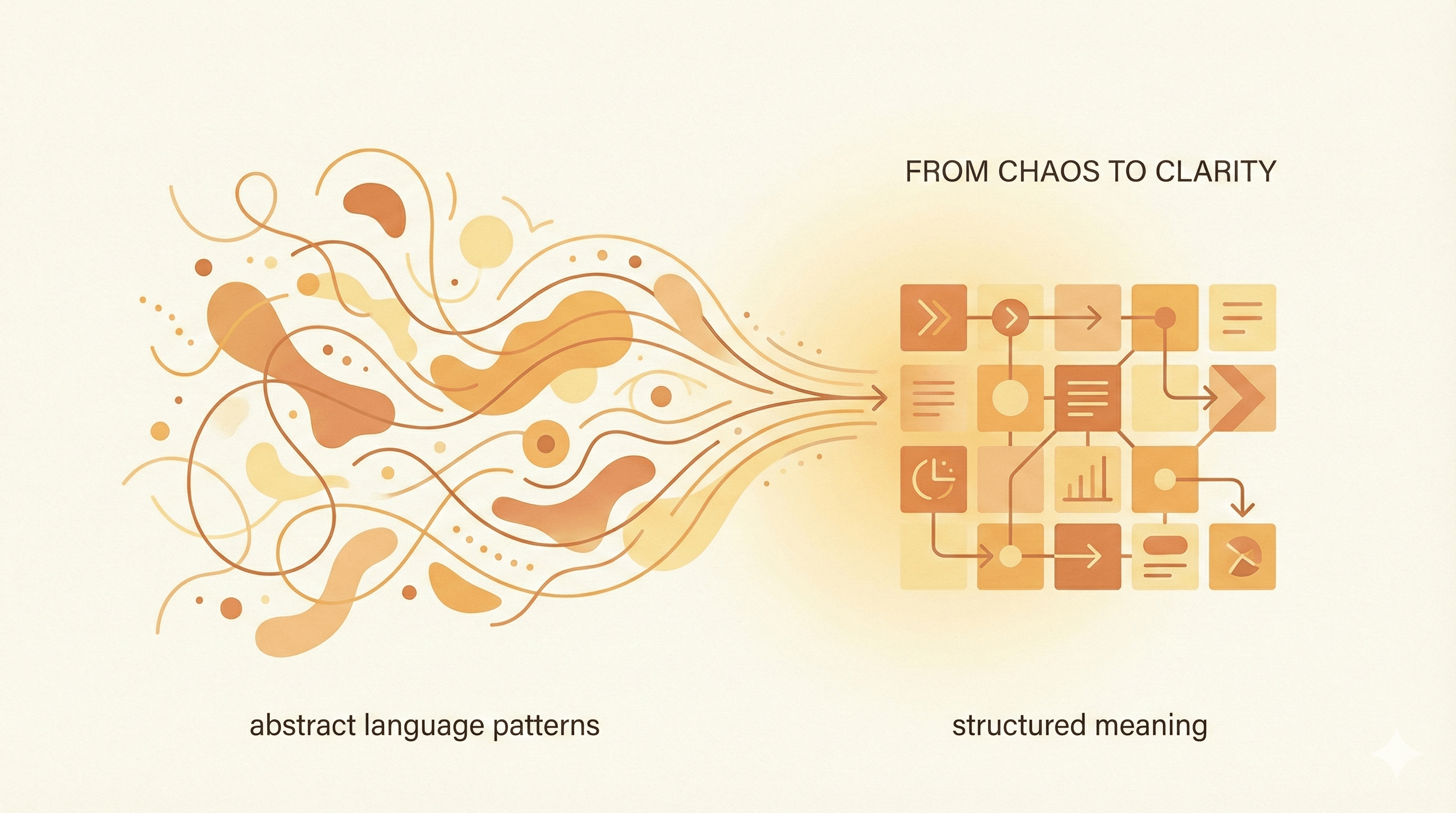
What we call “memory” is something else: a mixture of context, signal, attention and semantic reconstruction.
Understanding this is essential for using AI precisely - and for understanding why conversational systems need more than a single model to sustain real continuity.
1. AI doesn't store memories: it reconstructs patterns
A model doesn't have a personal story.
It doesn't have a timeline.
When he seems to remember something, what he really does is:
- Interpret the recent context,
- Identify statistical patterns related,
- Rebuild logical coherence starting from the text.
This memory is instantaneous, dynamic and non-emotional.
That is to say:
AI doesn't remember: it recovers probable trajectories.
That's why you can hold a 40-message conversation fluently...
and, at the same time, losing a critical detail because it was buried between louder signals.
2. “Context” is the working memory of a model
When we talk about “long context” (50K, 200K, 1M tokens), we talk about the amount of information that the model can See at the same time while predicting.
But being able to see doesn't mean being able to attend.
The models distribute their attention like a light bulb:
- the most recent thing weighs more,
- the most repeated thing weighs more,
- the most semantically relevant thing weighs more.
And everything else is blurred.
This explains why:
- a model can analyze an entire contract,
- but forget one small detail on page 7.
It's not incapacity: it's statistics.
3. Semantic memory: the illusion of perfect memory
A fascinating feature of modern AI is its ability to infer what you should remember, even if the exact data is no longer visible.
It's something like:
“I don't literally remember what you said, but I remember the kind of things that usually come after that.”
This creates the illusion of a human memory.
But it's not.
It is a coherent reconstruction based on previous patterns.
That's why some models:
- they complete ideas before you say them,
- they anticipate doubts,
- correct your inconsistencies without pointing it out.
They don't remember: They project.
4. And what does AI forget? Everything that doesn't reduce ambiguity
If a piece of information doesn't help:
- understand intention,
- predict the next action,
- maintain semantic coherence,
- or solve the task...
... the model discards it without warning.
In fact, forgetting is an essential part of making AI work well.
If I tried to hold everything back, the noise would outweigh the signal.
And here's a key truth:
AI doesn't forget by mistake. Forget by design.
5. Why does this idea of memory matter for conversational systems?
Because in a real conversation:
- people change subjects,
- mix tasks,
- leaves incomplete messages,
- Come back hours later,
- repeat something unintentionally,
- if it contradicts,
- or write from another channel.
A single model, however advanced it may be, cannot guarantee structured continuity.
That's why mature conversational platforms don't rely on “model memory”:
they use systems that combine:
- structured memory (CRM, history, consolidated context),
- Memory of intention (what the person wants to achieve),
- operational memory (tasks, pending actions),
- Conversation memory (relevant recent messages).
The key is to integrate and decide What should be remembered And What no, because remembering everything is as dangerous as remembering nothing.
This is where Peaking acts as a system, not a model:
- Prioritize intent over text.
- It maintains continuity between channels.
- It connects separate conversations in the same cognitive thread.
- Turn useful memories into actions: tasks, collections, appointments, follow-up.
- It prevents the agent from making mistakes due to “false memory”.
Human memory is narrative.
AI memory is statistical.
The memory of a conversational system must be Operational.
Conclusion
AI doesn't remember like we do.
It does not relive experiences.
It doesn't store stories.
What it does is reorganize the signal, reconstruct patterns and maintain enough coherence to advance a logical conversation.
The true digital literacy of 2025 is learning to work with that memory: knowing what to ask for, what not to ask for, what to expect and what not to assume.
AI predicts.
AI connects.
AI is infecting.
But the responsibility to decide What does it matter And What should be registered it falls on the systems that surround it.
That's the difference between a good conversation and an operation that actually moves forward.
.png)