
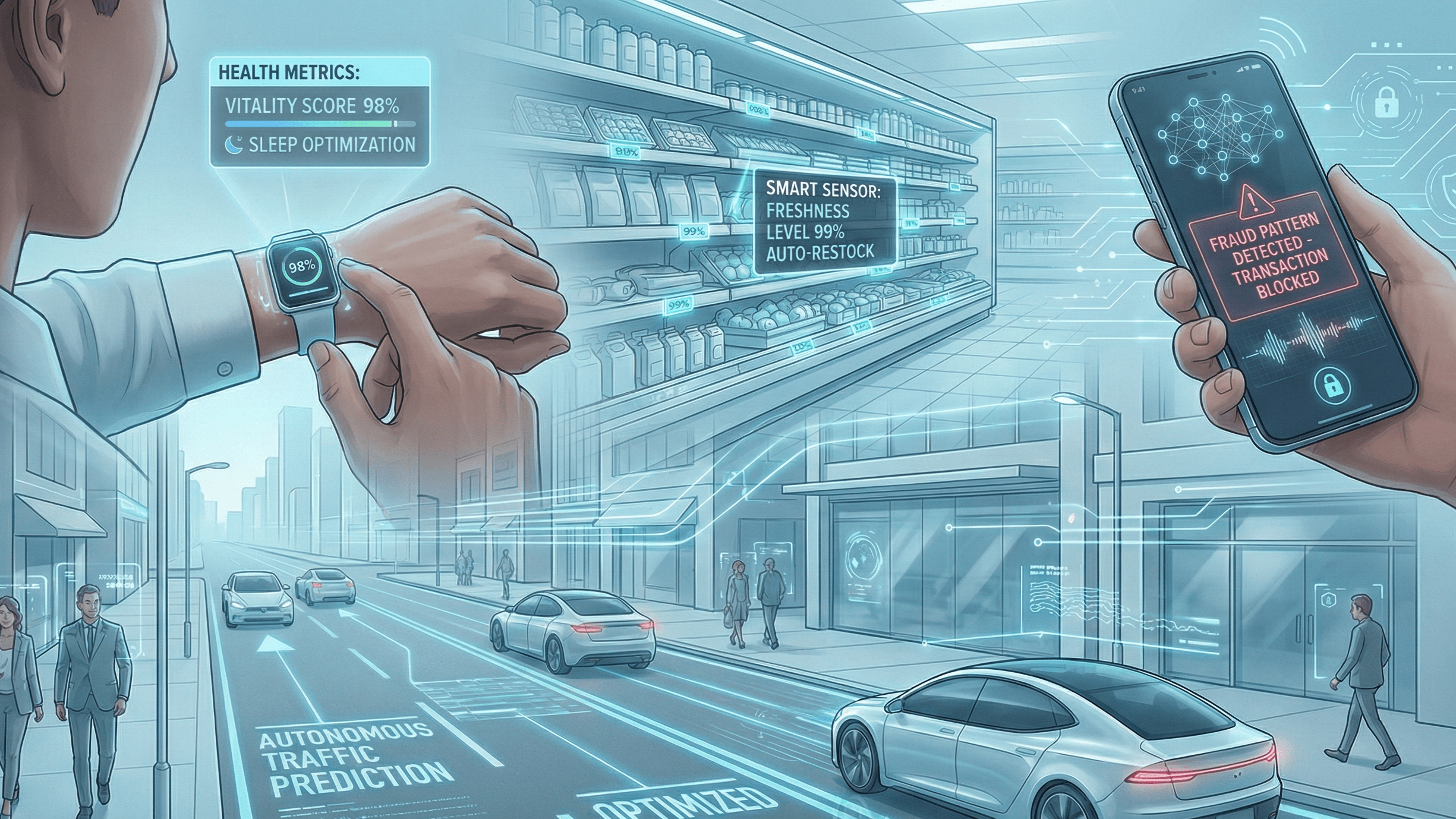
AI stopped “coming” and started happening to us
If a year ago someone asked us what AI looked like in real life, we would probably answer things like: “to edit photos”, “to write emails”, or “to look for something faster”.
The typical. The obvious.
But something changed in 2025:
AI stopped feeling futuristic and began to integrate into our daily lives in such a silent way that, when we finally noticed it, it was too late: it was already part of us.
And the interesting thing is that these changes did not appear in viral trends. They were not announced with fanfares. They spent weekdays, while we were lining up at the supermarket, looking for an address or asking for a service.
Here are the most unexpected uses we saw this year.
1. Cars now know more about traffic than cities themselves
Tesla, GM and Ford began deploying models that learn from the collective behavior of cars to predict traffic with a precision that Waze would dream of.
They don't just tell you the way: Do blockages anticipate you before they appear in the app.
Welcome to predictable traffic (finally).
Source: Tesla Autonomy Day, GM Cruise Updates 2024—2025.
2. Preventive health no longer depends on “feeling sick”
Apple and Samsung are integrating AI-based risk analysis into their wearables.
A Stanford study showed that certain models can detect heart anomalies. up to 24 hours before that symptoms appear.
It's like having a doctor on your wrist who doesn't get tired, isn't distracted and doesn't sleep.
Sources: Stanford Medicine 2024, Apple Research Updates 2025.
3. Supermarkets are using AI to prevent products from spoiling
Carrefour, Walmart and 7-Eleven are implementing smart cameras that detect maturity, life cycles and turnover.
The impact?
Less waste, fresher products and decisions that a manager used to make “by eye” and now makes a trained model with thousands of images.
Sources: Walmart Corporate AI 2024, Carrefour AI Pilots 2025.
4. Public services that finally react before the problem
In Tokyo and Tallinn, AI systems monitor water leaks, electrical faults and micro-variations in pressure to anticipate cuts and damage.
The infrastructure stopped waiting for something to explode.
Sources: e-Estonia, Tokyo AI Infrastructure Trials 2024.
5. AI already reads voice patterns to detect scams
Mastercard, Telefónica and several financial institutions are using models that identify suspicious patterns in calls.
They don't listen to content.
They detect odds.
And they save thousands of vulnerable people without them knowing that there was a “guardian AI” behind them.
Sources: Mastercard AI Security 2024—2025, Telefónica AI Labs.
And in sales... something also happened without us realizing it
While all of this was happening in cars, cities, supermarkets and banks, we saw the same phenomenon in another key place: the conversations.
Before, selling on WhatsApp or Instagram depended on being available.
Now it depends on something much more stable:
AI is learning to hold conversations, detect intent and carry out actions such as scheduling, qualifying or charging.
It's exactly the same logic we saw in cars and preventive health:
— anticipate
— respond before the error
— act before the problem
— hold on to what is important without fail
And that's where Peaking comes in:
not like “a chatbot”, but like that silent system that doesn't get tired, doesn't forget and doesn't leave holes where money normally escapes.
Just as AI is already in transit, in wearables and in infrastructure...
it's also already in your conversations.
And whoever uses it will notice it before anyone who doesn't.
.png)


.jpg)