.jpg)
There is a moment —sometimes small, almost imperceptible— where SMEs look in the mirror and understand that they can no longer continue to operate “as usual”.
It's not when it grows up.
It's not when you hire.
It's not when another branch opens.
It happens before.
It happens in the midst of tiredness.
On the call that comes in at 9 pm.
On the customer who was lost without explanation.
In the internal argument that no one wanted to have.
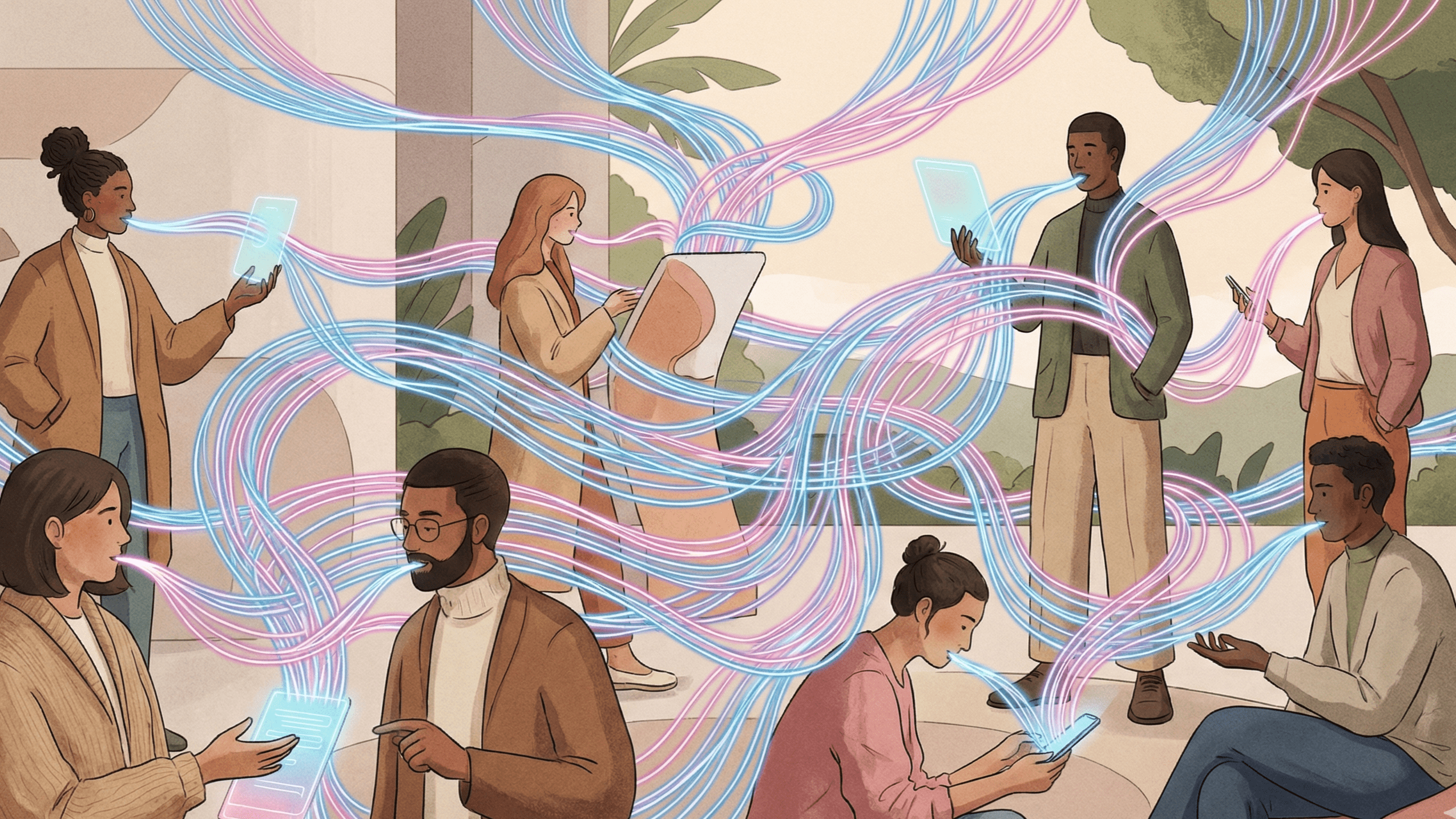
In the sense that the company is being sustained thanks to human strength... not thanks to structure.
That moment is the threshold.
The start of the most important transition:
from surviving to operating.
Survival mode: efficient... until no longer
In LATAM, survival mode is almost a talent.
Solve quickly.
Answer everything.
Put out fires.
Move sales even if there is no process.
Juggling chats, calls, and individual tasks.
For a while, it works.
Those who run SMEs are usually people who are extraordinarily capable of doing anything.
But that model has a clear limit:
it is profoundly dependent on people, not on systems.
And when the company grows, the key person is no longer enough.
The symptom that reveals everything
In all the interviews, diagnoses and conversations we have as a Peaking team, we find a pattern:
the company is starting to run out of “mental space”.
Things are forgotten.
Customers repeat themselves.
The equipment burns.
The owner feels that he lives stuck in an operating loop.
And then the inevitable phrase appears:
“It can't be that we depend so much on me.”
That phrase is the turning point.
Operating: The Art of Making Business Work Without You
Operating is not having an ERP.
It's not having a CRM.
It's not writing a manual.
Operating means that the company works just as well on a good day as it does on a bad one.
The thing is that information flows without depending on memory.
The thing is that the follow-up is not lost.
It's that tasks don't live in a person's head.
Businesses that “operate” do one very simple and very powerful thing:
they turn human activities into sustainable processes.
And that changes everything.
A Gallup study of global SMEs found that businesses that manage to standardize their business activities “increase annual growth by up to 28% and reduce operating turnover by 35%.”
Verifiable source: https://www.gallup.com/workplace/321963/what-small-businesses-need-grow.aspx
Not because they have more tools.
But because they stopped operating in human mode and started operating in system mode.
The Human Side of the Transition
The transition doesn't start with technology.
It starts with discomfort.
The discomfort of admitting that improvising is no longer enough.
The discomfort of seeing that the team is tired.
The discomfort of accepting that the business depends too much on key people.
And yet, it's a profoundly liberating transition.
Because when the company operates:
- There is less invisible pressure
- There is more clarity
- There's more time to think
- there is less emotional dependence on each message
The company is starting to breathe differently.
Here, at this exact point, is where AI ceases to be “just another tool” and becomes relevant.
Not because it replaces anyone,
But because Accompany the company to sustain what used to depend only on people:
the conversation, the follow-up, the continuity, the agenda.
We see it with every business that approaches Peaking:
AI doesn't solve chaos,
but it amplifies the structure when it already exists.
It's as if the SME were finally saying:
“Now we can operate... and now we can automate.”
That's the silent transition.
The most difficult.
And the one that changes everything.
.png)
.jpg)